
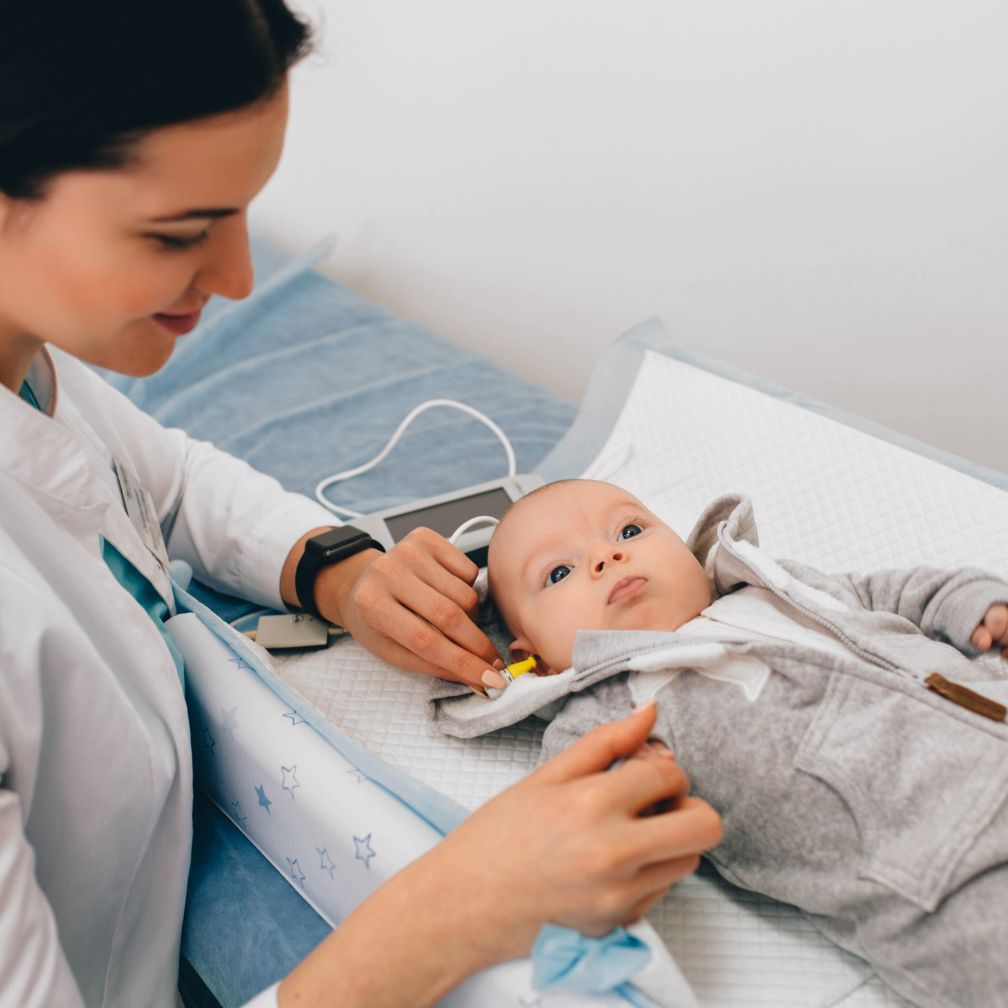
For both parents of a young infant, getting a diagnosis of early auditory impairment naturally causes profound stress and concern. Yet the positive reality is that through early screening and correct support, young children with auditory challenges are able to prosper. In fact, such infants can build verbal communication, expressive ability, and strong bonds within their surroundings, fostering an enriched future!
Utilizing amplified hearing devices or surgical cochlear units creates two distinct medical options for supporting infants with auditory challenges. Throughout this resource, we examine their operational methods to assist you in choosing the best pathway for your infant.
Grasping the Basics of Pediatric Hearing Loss
Auditory loss in newborn babies can be driven by several underlying origins, including:
- Specific genetic factors (even without a family history)
- Early prenatal viral exposures including cytomegalovirus (CMV) or rubella strains
- Severe complications during birth, such as lack of oxygen or premature birth
- Select therapeutic drugs administered within specialized newborn intensive units
What constitutes the single most vital measure? Swift clinical diagnosis. This clinical standard explains why newborns across the United States undergo auditory checks prior to leaving the birth facility. Trained pediatric hearing clinicians strongly promote the established “1-3-6” intervention timeline:
- Primary hearing check completed prior to 1 month of age
- Official hearing diagnosis finalized within 90 days of life
- Therapeutic intervention (employing wearable technology or developmental therapy) commenced prior to 6 months of life
Meeting these procedural steps delivers to infants their ideal path toward flourishing speech, language mastery, and neurological health. Whenever you seek direction on these auditory tests, your family pediatrician will gladly help!
Pediatric Hearing Aids for Young Babies
When infants display mild to severe hearing challenges, pediatric hearing aids typically serve as the primary solution. Such compact, fitted instruments increase acoustic volume, enabling babies to process spoken dialogue and surrounding noise with greater accuracy.
Pediatric-grade hearing devices prove to be:
- Entirely safe for pediatric application in infants merely weeks post-birth
- Manufactured with soft, gentle ear impressions that adapt smoothly during physical growth
- Constructed with tamper-proof battery doors and pediatric-specific safety elements
- Custom-calibrated by a certified pediatric audiologist to match your baby’s specific auditory profile
While your infant develops, hearing instruments necessitate frequent maintenance to preserve physical comfort and functional efficacy.
Advanced Surgical Solutions: Infant Cochlear Implants
If a baby has profound to severe sensorineural hearing impairment and doesn’t benefit enough from hearing aids, a cochlear implant may be recommended. In contrast to traditional hearing devices, cochlear implants:
- Involve outpatient surgical implantation within the temporal bone performed under controlled clinical conditions
- Directly bypass compromised areas inside the inner ear
- Change ambient sound waves into direct electrical impulses that actuate the nerve of hearing
Dedicated pediatric cochlear devices serve as:
- Fully cleared by the FDA for pediatric patients starting at 9 to 12 months of age
- Deeply effective when supported through early developmental habilitation and consistent family involvement
- Advised exclusively after a complete clinical review by a pediatric audiologist and ear, nose, and throat doctor
This evaluative framework encompasses neuroimaging scans, advanced hearing evaluations, and in-depth discussions surrounding achievable long-term goals.
Evaluating Hearing Aids Against Cochlear Implants
- Mild to severe hearing loss targets Hearing Aids; Severe to profound hearing loss requires Cochlear Implants
- Non-Invasive wearable application: Hearing Aids; Surgical internal implantation: Cochlear Implants
- Standard sound amplification logic: Hearing Aids; Electrical signal stimulation conversion: Cochlear Implants
- Intervention starts in early infancy: Hearing Aids; Access starts at 9-12 months: Cochlear Implants
Concluding Guidance on Pediatric Hearing Technology
If your infant is diagnosed with a hearing condition, you have access to outstanding technological paths and dedicated expert support. Under the care of specialized pediatric hearing doctors, a vast majority of children attain speech and language proficiency that rivals their normal-hearing peers.
Whether your youngster qualifies for external hearing aids or surgical cochlear implants, acting swiftly establishes a foundation for lifelong communicative success.
Are you looking for clarity regarding your infant’s hearing development? Connect with our office today for a complete diagnostic review and tailor-made care roadmap.